Charge information
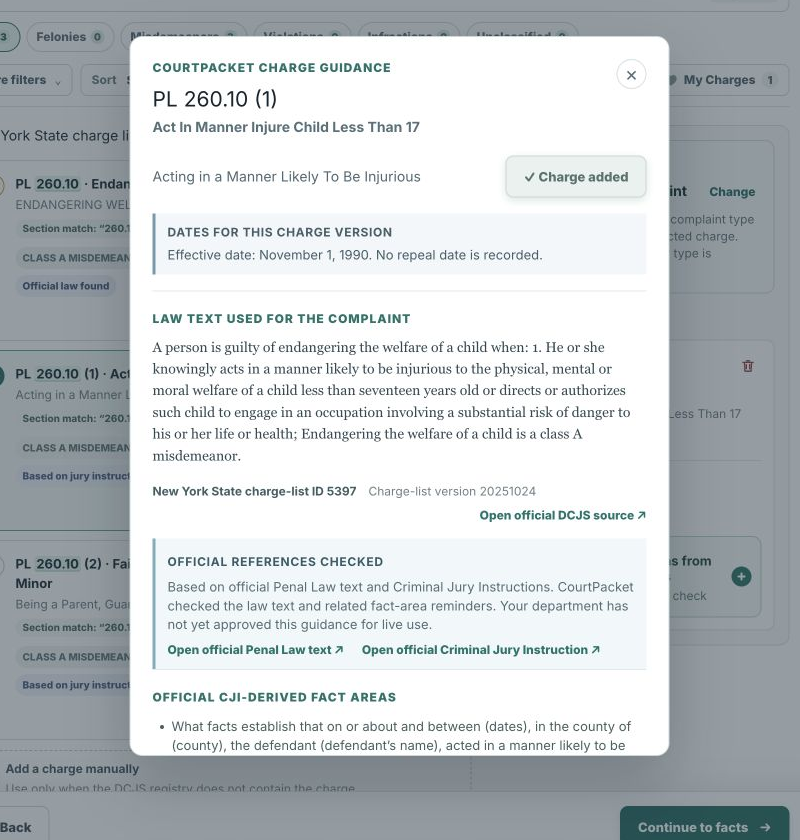
Review the citation, classification, title, and other information associated with a charge.
Complaint drafting for law enforcement
CourtPacket guides law-enforcement personnel through an organized complaint-drafting process—from case information and charge selection to factual allegations, review, and a printable instrument.
Law enforcement identified the need.
We built CourtPacket with them.
CourtPacket brings charge information, applicable statutory language, and available model jury instructions into the complaint-drafting workflow—so officers can review relevant information without moving between separate references.
Officers remain responsible for choosing the charges and documenting the facts. CourtPacket keeps the supporting legal material visible throughout that work.
CourtPacket brings together charge information, statutory language, and model jury instructions so officers can review relevant information without moving between separate references.
Review the citation, classification, title, and other information associated with a charge.
Keep the applicable statutory language available while preparing the complaint.
Where available, reviewed jury-instruction material helps identify charge-specific fact areas.
CourtPacket guidance can be combined with department-specific guidance and practices.
Move through each part of the complaint in a clear and logical order.
Keep helpful charge and department information available while documenting the facts.
Identify missing information, make corrections, and review the completed instrument.
Support the use of department-approved forms, guidance, and practices.
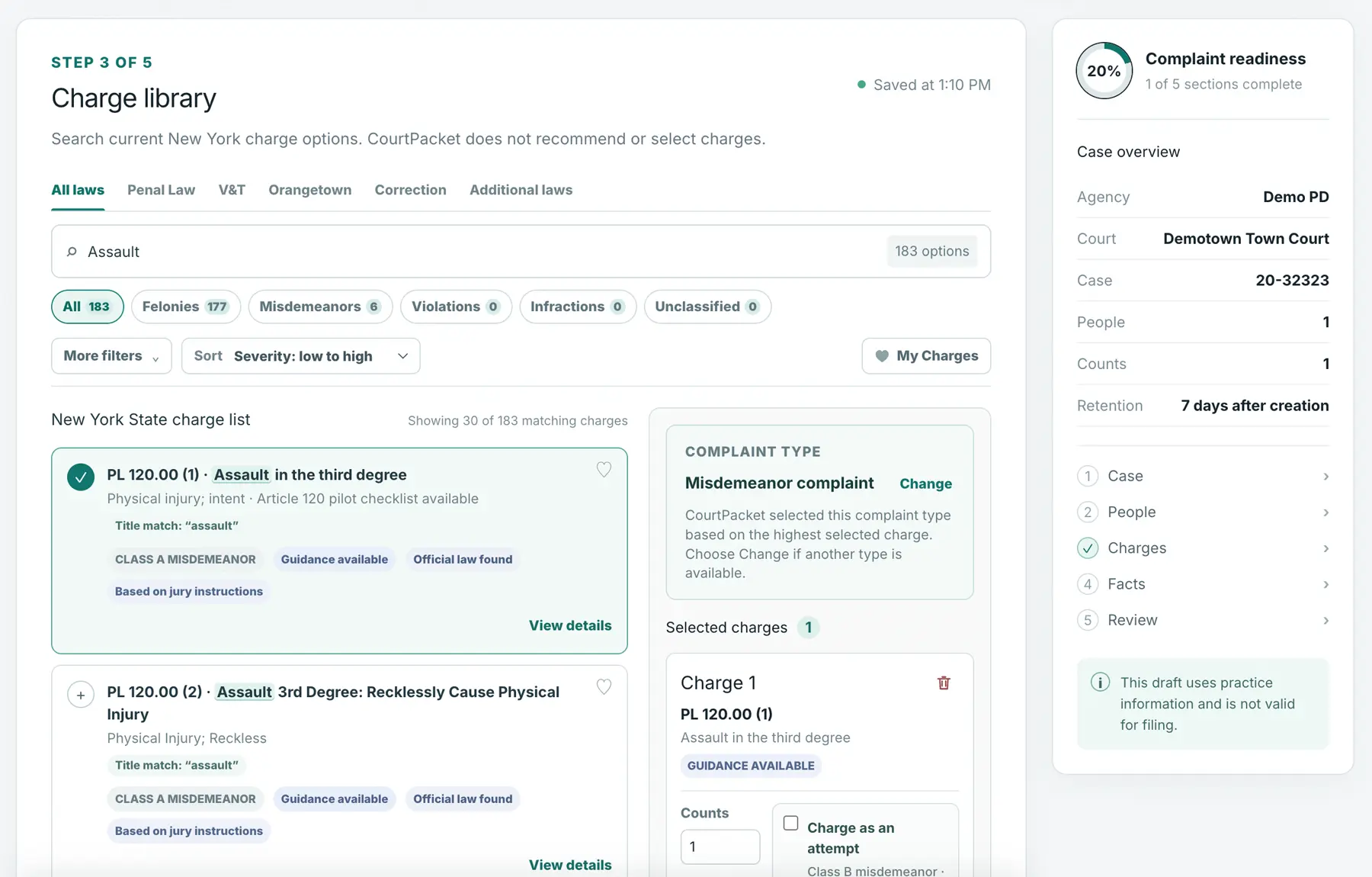
Search by name or citation, narrow the results, and see what information and drafting support are available for each charge.
Search with context
Search charges by name or citation and narrow the results using relevant filters.
CourtPacket helps officers find and review the available information. The officer decides which charges to select.
Fact areas, not conclusions
Where available, charge-specific guidance helps officers consider the facts that may need to be documented in their own words.
It does not determine probable cause or declare that legal elements have been satisfied.
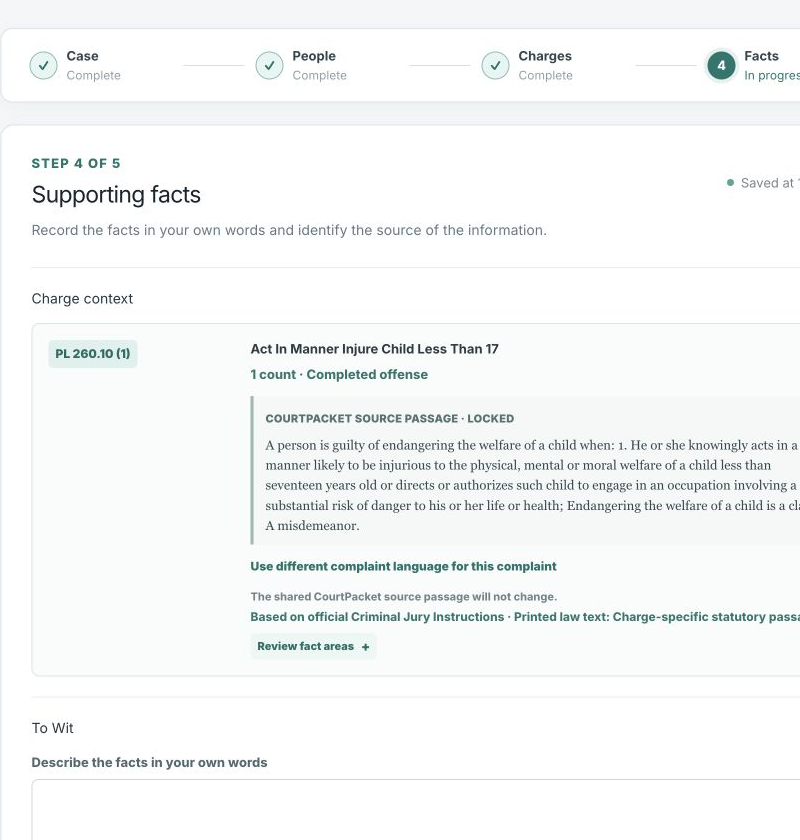
One guided path from the information at hand to a complaint ready for careful review.
Bring the case, people, occurrence details, and charges together.
Record factual allegations and sources of knowledge in the officer’s own words.
Resolve missing required information, review the completed instrument, and prepare it for printing.
Built around the people who prepare, guide, and work with the initial complaint.
Prepare the initial complaint through a clear, guided workflow.
Support consistent practices, approved guidance, forms, and document settings.
Work with clearer, more organized initial instruments.
CourtPacket is designed to support professional judgment—not replace it.
Officers remain responsible for choosing charges, documenting the facts, identifying their sources of knowledge, and reviewing the completed instrument.
Initially focused on New York law-enforcement and court workflows.
Request a demonstration and explore how CourtPacket could support your department’s complaint-drafting workflow.
Tell us a little about your organization.